
Background:
Epic Eats is a popular restaurant chain with several locations across the city. They’re known for their mouth-watering burgers, crispy fries, and refreshing shakes. To better understand their customers and optimize their menu, Epic Eats needs your help with data analysis.
Problem Statement:
Rahul, the owner of Epic Eats, wants to leverage data to gain a deeper understanding of his customers’ visiting patterns, spending habits, and favorite menu items. This insight will enable him to deliver a more personalized experience for his loyal customers.
Rahul aims to use these findings to inform his decision to expand the existing customer loyalty program. Additionally, he needs help generating basic datasets that his team can easily inspect without requiring SQL expertise.
Due to privacy concerns, Rahul has shared a sample of his overall customer data. He hopes this sample is sufficient for you to write fully functional SQL queries to answer his questions.
Rahul has provided three key datasets for this case study:
• sales
• menu
• members
Example Datasets
All datasets exist within the Epic Eats database schema – be sure to include this reference within your SQL scripts as you start exploring the data and answering the case study questions.
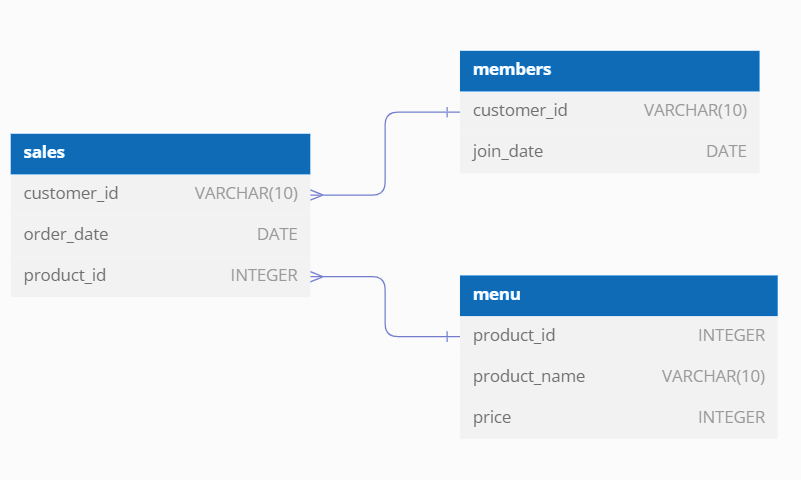
Table 1: sales
The sales table captures all customer_id level purchases with corresponding order_date and product_id information for when and what menu items were ordered.
| customer_id | order_date | product_id |
| AAA | 2024-01-01 | 101 |
| AAA | 2024-01-01 | 102 |
| AAA | 2024-01-07 | 102 |
| AAA | 2024-01-10 | 103 |
| AAA | 2024-01-11 | 103 |
| AAA | 2024-01-11 | 103 |
| BBB | 2024-01-01 | 102 |
| BBB | 2024-01-02 | 102 |
| BBB | 2024-01-04 | 101 |
| BBB | 2024-01-11 | 101 |
| BBB | 2024-01-16 | 103 |
| BBB | 2024-02-01 | 103 |
| CCC | 2024-01-01 | 103 |
| CCC | 2024-01-01 | 103 |
| CCC | 2024-01-07 | 103 |
Table 2: menu
The menu table maps the product_id to the actual product_name and price of each menu item.
| product_id | product_name | price |
| 101 | Sandwich | 10 |
| 102 | Pizza | 15 |
| 103 | Burger | 12 |
Table 3: members
The final members table captures the join_date when a customer_id joined the beta version of the Epic Eats loyalty program.
| customer_id | join_date |
| AAA | 2024-01-07 |
| BBB | 2024-01-09 |
Entity Relationship Diagram:
Case Study Questions:
Each of the following case study questions can be answered using a single SQL statement:
- 1. What is the total amount each customer spent at Epic Eats?
- 2. How many days has each customer visited Epic Eats?
- 3. What was the first item from the menu purchased by each customer?
- 4. What is the most purchased item on the menu and how many times was it purchased by all customers?
- 5. Which item was the most popular for each customer?
- 6. Which item was purchased first by the customer after they became a member?
- 7. Which item was purchased just before the customer became a member?
- 8. What is the total items and amount spent for each member before they became a member?
- 9. If each $1 spent equates to 10 points and Sandwich has a 2x points multiplier – how many points would each customer have?
- 10. In the first week after a customer joins the program (including their join date) they earn 2x points on all items, not just Sandwich – how many points do customer AAA and BBB have at the end of January?
Bonus Questions:
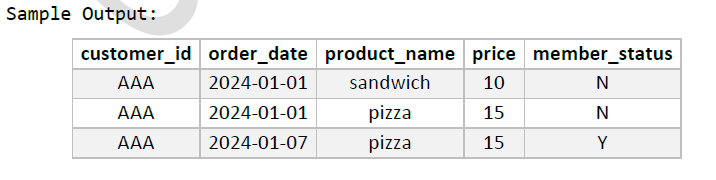
Q1. Recreate the table with columns:
customer_id, order_date, product_name, price, member_status (Y/N)
Q2. Rank All The Things
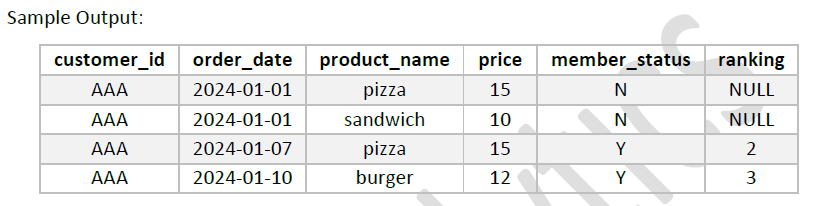
Rahul also requires further information about the ranking of customer products, but he purposely does not need the ranking for non-member purchases, so he expects null ranking values for the records when customers are not yet part of the loyalty program.
Solutions:
Q 1. What is the total amount each customer spent at Epic Eats?
SELECT
sales.customer_id,
SUM(menu.price) AS total_sales
FROM sales
INNER JOIN menu
ON sales.product_id = menu.product_id
GROUP BY sales.customer_id
ORDER BY sales.customer_id;
Output:
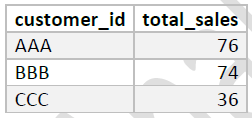
Customer AAA spent $76.
Customer BBB spent $74.
Customer CCC spent $36.
Q 2. How many days has each customer visited Epic Eats?
SELECT
customer_id,
COUNT(DISTINCT(order_date)) AS days_visited
FROM sales
GROUP BY customer_id;
Output:
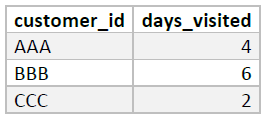
Customer AAA visited 4 days, BBB 6days and CCC for 2 days visited respectively.
Q 3. What was the first item from the menu purchased by each
Customer?
SELECT
customer_id,
product_name AS first_product_ordered
FROM (
SELECT
sales.customer_id,
menu.product_name,
DENSE_RANK() OVER (
PARTITION BY sales.customer_id
ORDER BY sales.order_date) AS densrank
FROM sales
INNER JOIN menu
ON sales.product_id = menu.product_id
) AS sales_rank
WHERE densrank = 1
GROUP BY customer_id, product_name;
Output:
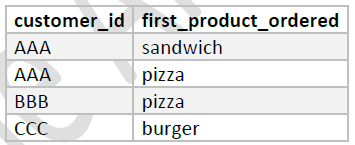
Customer AAA mostly purchased sandwich and pizza.
Customer BBB mostly purchased pizza.
Customer CCC mostly purchased burger.
Q 4. What is the most purchased item on the menu and how many times
was it purchased by all customers?
This Question needs to be solved in two parts, where in part 1, we will find the most
purchased item and in Part 2, we will fetch the results for how many times
customers purchase this item.
-- Part 1
SELECT
menu.product_name AS most_purchased_item,
COUNT(sales.product_id) AS purchase_count
FROM sales
INNER JOIN menu
ON sales.product_id = menu.product_id
GROUP BY menu.product_name
ORDER BY purchase_count DESC
LIMIT 1; -- this gives the most purchased item on menu
Output:

Burger is the most purchased item with 8 purchases.
-- Part 2
SELECT
sales.customer_id,
COUNT(sales.product_id) AS purchase_count
FROM sales
INNER JOIN menu
ON sales.product_id = menu.product_id
WHERE sales.product_id = (SELECT product_id
FROM sales
GROUP BY product_id
ORDER BY COUNT(product_id)
DESC LIMIT 1)
GROUP BY sales.customer_id ,
sales.product_id,
menu.product_name
ORDER BY purchase_count DESC;
-- this gives the list of customers who have purchased
highest purchased item
Output:
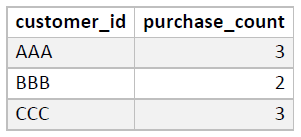
Out of the 8 highest purchases of burger, customer AAA purchased 3 times, BBB for 2 times and CCC for 3 times.
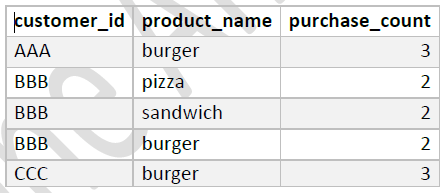
Q 5. Which item was the most popular for each customer?
WITH cte_popular_products AS (
SELECT
sales.customer_id,
menu.product_name,
COUNT(*) AS purchase_count,
DENSE_RANK() OVER (
PARTITION BY sales.customer_id
ORDER BY COUNT(*) DESC) AS densrank
FROM sales
JOIN menu ON sales.product_id = menu.product_id
GROUP BY sales.customer_id, menu.product_name
)
SELECT
customer_id,
product_name,
purchase_count
FROM cte_popular_products
WHERE densrank = 1;
Output:
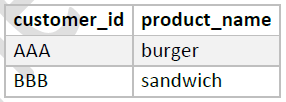
Q 6. Which item was purchased first by the customer after they became
a member?
WITH cte_after_membership AS (
SELECT
members.customer_id,
sales.product_id,
DENSE_RANK() OVER (
PARTITION BY members.customer_id
ORDER BY sales.order_date) AS densrank
FROM members
INNER JOIN sales
ON members.customer_id = sales.customer_id
AND sales.order_date > members.join_date
)
SELECT
cte_after_membership.customer_id,
menu.product_name
FROM cte_after_membership
INNER JOIN menu
ON cte_after_membership.product_id = menu.product_id
WHERE densrank = 1
ORDER BY cte_after_membership.customer_id ASC;
Output:
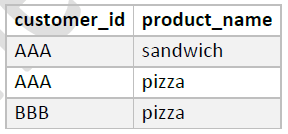
Q 7. Which item was purchased just before the customer became a
member?
WITH cte_before_membership AS (
SELECT
members.customer_id,
sales.product_id,
DENSE_RANK() OVER (
PARTITION BY members.customer_id
ORDER BY sales.order_date) AS densrank
FROM members
INNER JOIN sales
ON members.customer_id = sales.customer_id
AND sales.order_date < members.join_date
)
SELECT
cte_before_membership.customer_id,
menu.product_name
FROM cte_before_membership
INNER JOIN menu
ON cte_before_membership.product_id = menu.product_id
WHERE densrank = 1
ORDER BY cte_before_membership.customer_id ASC;
Output:
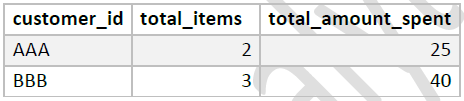
Q 8. What are total items and amount spent for each member before
they became a member?
SELECT
sales.customer_id,
COUNT(sales.product_id) AS total_items,
SUM(menu.price) AS total_amount_spent
FROM sales
JOIN members ON sales.customer_id = members.customer_id
JOIN menu ON sales.product_id = menu.product_id
WHERE sales.order_date < members.join_date
GROUP BY sales.customer_id
ORDER BY sales.customer_id;
Output:
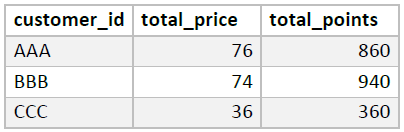
Q 9. If each $1 spent equates to 10 points and Sandwich has a 2x points
multiplier, how many points would each customer have?
SELECT
sales.customer_id,
SUM(menu.price),
SUM(CASE
WHEN menu.product_name = 'sandwich' THEN menu.price * 20
ELSE menu.price * 10
END) AS total_points
FROM sales
JOIN menu ON sales.product_id = menu.product_id
GROUP BY customer_id;
Output:
Q 10. In the first week after a customer joins the program (including
their join date), they earn 2x points on all items, not just Sandwich. How
many points do customers AAA and BBB have at the end of January?
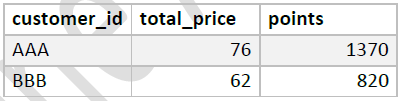
SELECT
sales.customer_id,
SUM(menu.price) AS total_cost,
SUM(CASE
WHEN sales.order_date BETWEEN members.join_date AND
DATE_ADD(members.join_date, INTERVAL 6 DAY) THEN menu.price*2*10
ELSE CASE
WHEN product_name = 'sandwich' THEN price * 20
ELSE price * 10
END
END) AS points
FROM sales
INNER JOIN menu ON sales.product_id = menu.product_id
INNER JOIN members ON sales.customer_id = members.customer_id
WHERE sales.order_date <='2024-01-31'
AND sales.customer_id IN ('AAA', 'BBB')
GROUP BY sales.customer_id
ORDER BY sales.customer_id;
Output:
Bonus Questions:
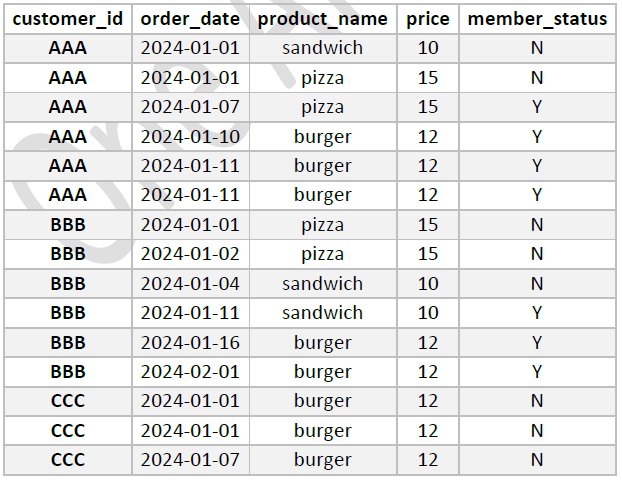
Q1. Join All The Things
Recreate the table with columns:
customer_id, order_date, product_name, price, member_status (Y/N)
SELECT
sales.customer_id,
sales.order_date,
menu.product_name,
menu.price,
CASE
WHEN sales.order_date >= members.join_date THEN 'Y'
ELSE 'N' END AS member_status
FROM sales
LEFT JOIN members
ON sales.customer_id = members.customer_id
INNER JOIN menu
ON sales.product_id = menu.product_id
ORDER BY members.customer_id, sales.order_date;
Output:
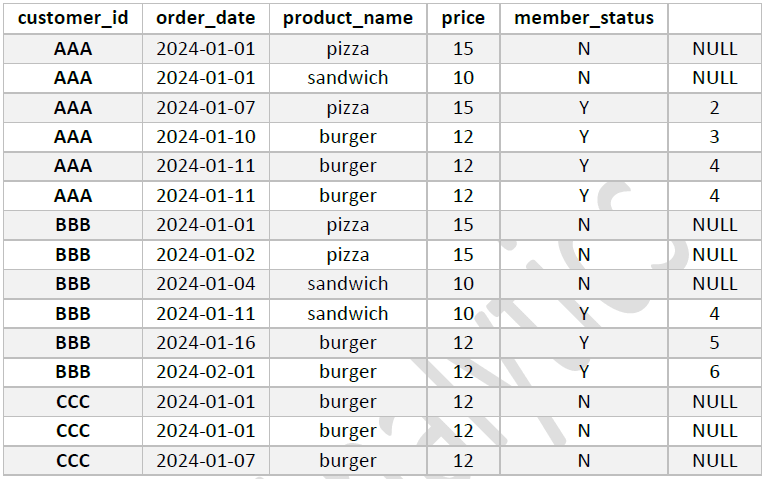
Q2. Rank All The Things
Rahul also requires further information about the ranking of customer products, but
he purposely does not need the ranking for non-member purchases, so he expects
null ranking values for the records when customers are not yet part of the loyalty
program.
WITH cte_all_joined AS (
SELECT
s.customer_id,
s.order_date AS order_date,
m.product_name,
m.price,
CASE
WHEN s.customer_id IS NOT NULL
AND s.order_date >= mm.join_date THEN 'Y'
ELSE 'N'
END AS member_status
FROM sales s
INNER JOIN menu m ON s.product_id = m.product_id
LEFT JOIN members mm ON s.customer_id = mm.customer_id
)
SELECT
*,
CASE
WHEN member_status = 'Y' THEN
DENSE_RANK() OVER (
PARTITION BY customer_id
ORDER BY order_date)
ELSE
NULL
END AS ranking
FROM
cte_all_joined
ORDER BY
customer_id,
order_date,
product_name;
Output:
That was a fun experience! I deepened my understanding of using CTEs, ranking functions, CASE statements, and joins to analyze Rahul’s customer data effectively.
For more such SQL Challenges and Data Analysis related stuff, Subscribe my youtube channel http://www.youtube.com/@One_Analytics
- Github: http://www.github.com/vaibhavchavan20
- LinkedIn: http://www.linkedin.com/in/vaibhav-chavan
- Youtube: http://www.youtube.com/@One_Analytics
- WhatsApp: http://www.bit.ly/WhatsAppOneAnalytics
Thank you…!
 One Analytics
Leave a comment